Wednesday, April 8, 2009

Domo Arigato, Mr. Roboto


Robocop was one of the few movies on the list that I've seen previous to this class, and I have to say, I didn't really enjoy it the first time around. However, after watching it a second time I completely retract my previous statement. I still don't think Robocop is a movie for everyone--mostly meaning my thirteen-year-old self--but I do now realize that it is more than just a cheesy 80s action flick with a corny central storyline and lower-budget special effects. In fact, I would chiefly describe Robocop as smart, which is not a word I use for most action movies.

Satire is one of my favorite genres, be it more dramatic or more comedic, so I was pretty pleased when this it came up as one of the "categories of cool" for the week. I especially liked the satire in Robocop because it is noticeable enough so that the film isn't written off but it is not overt enough to be obnoxious. Even though the film focused mainly on satirizing issues facing the 1980s, such as the Reagan administration and looming privitization of any and every business, the commentary is still relevant today. We're undergoing a major change between privitization and socialization and I think that capitalism will be an issue for quite a few decades to come.

There is also the issue of the place of science in business and society. In the beginning the major corporation in Robocop uses science to build potentially dangerous weaponry that has no human judgment or discretion to deal with the issue of crime, which is to me a very frightening idea. The scene in which Jones' pet project ED-209 blasts the hell out of a company drone when it malfunctions seems a bit over-the-top (as it is meant to), but when you think about it the idea isn't totally far-fetched. Even if the scientists had been able to stop it in the boardroom, what if it had malfunctioned when on duty? Do heavily armed machines really need to be out on the streets patrolling for crime with little to no human control and involvement? I know I sound kind of paranoid, but in an age where literally almost anything is technologically plausible, I don't feel so silly.

When it comes to these scientific advances, we not only have morality problems of creating a robotic weapon, but the ethical issue of Murphy, Robocop himself. The moral question of whether or not it is humanistically right to create a cyborg from someone who was once fully human looms large over the entire movie. Sure, there is the obvious ethical faux-pas of erasing his memory and the entire Directive Four thing that is definitely not right, but what of the idea of using a dead guy as a super crime-fighting robot in the first place? Even if they hadn't erased his memory or gotten rid of all of his body parts, is it in any sense right? We discussed in class how corny the storyline of Murphy and Lewis and the whole buddy-cop thing was, but I believe that it was there to make a point about the extents to which science should be used. The beginning when Murphy is still Murphy and he comes into the station as the new kid in town, gets assigned a pretty lady cop partner, and talks about his kids is pretty hokey, but I think that (like everything in a Verhoeven movie) the hokiness has a purpose. As we see later on in the movie, Murphy as Robocop can't relate to Lewis or anyone else in that same way. As a human he can be hokey and cheesy and build bonds, but as a robot he is primarily a product. There are still parts of humanity left, but it definitely is not the same.

This movie gave me a lot of food for thought; in fact, more than enough to digest in just one blog. I can already tell this is a film I'm going to revisit several times in the months and years to come, and hopefully I can find even more nuances of satire in every viewing. Domi arigato for now, Robocop, and I'm sure I'll see you again soon.

Tuesday, April 7, 2009

Maybe I'm Just Cynical, but...


If you don't look at Saturday Night Fever closely, you might see the kind of thing that I saw previous to watching the film in class and discussing the different themes and meanings within the movie. At first glance, it looks like just another dance movie: lower class male + pretty girl he meets at a club/studio + talent for dance + dance competition/trial of some sort = stereotypical dance movie. However, this is not the case. Saturday Night Fever is truly unique, at least when it is put up for comparison with other dance movies, especially those produced within the last ten years or so. I haven't seen every single movie about dancing made since Saturday Night Fever, but many that I have seen follow the formula above and are tied up in a nice happy ending where everyone gets what they want or learns a valuable life lesson, whereas Saturday Night Fever keeps it gritty and realistic til the very end.

Take for example 2006's Step Up, in which tough street kid Tyler meets upper middle-class dancer Nora when he and some friends break into the art school she attends. The two end up working together, dancing to impress dance troupe scouts for a prospective career (Nora) and to gain admittance into said fancy art school to get off the streets and actually have a future (Tyler). It's been out for a while and even spawned a sequel by now, but I only saw the movie this past summer after hearing several of my classmates gush about how romantic it was during high school. I have to say, I really wasn't that impressed; the movie tries so hard to be street, bringing gang life, auto theft, and even a grudge killing into the script, but I thought it ultimately came off as weakly written and kind of cheesy. And of course, the main characters end up falling in love getting what they both want in an optimistic, cheery ending.

Another film such as this is 2001's Save the Last Dance, in which
Julia Stiles and Sean Patrick Thomas (classically trained privileged white female and lower class black male with high hopes and
dreams) team up to get Julia Stiles' character into Julliard. Julia gets into Julliard, Sean gets into Georgetown, the two star-crossed teens fall in love. The acting and script were somewhat redeemable in this movie, but surely this is starting to sound familiar. The point I'm trying to make is that these movies and a ton of others like them have the same essential elements as Saturday Night Fever, but lack one important theme: realism. Sure, Tony goes to the club and dances his little heart out and he is rather talented, but at the end of the night (and at the end of the film) he still lives with his parents in Brooklyn selling paint for a living. It would have been easy to write the script more optimistically, giving Tony a big break or getting him a girlfriend or even just giving him a genuine determination to do better by himself, but that isn't what happens, and that it what makes the movie worthy of its role in film history.

Sure, Saturday Night Fever is definitely the product of a more pessimistic decade while contemporary dance movies are (well, were) produced in more optimistic times. Maybe with the recession upon us, we'll see this trend change, but my prediction is that dance movies will stay optimistic. Watching these films is within itself a form of escapism for people with real lives and real problems, people who aren't going to Julliard anytime soon, people who go back to selling paint after the movie has ended. Maybe fluffy and romantic dance movies are not of as great a quality as Saturday Night Fever, but they have their role and purpose just the same. Everybody needs an escape sometimes, and those who can't dance watch.

Wednesday, April 1, 2009

Fine, I'll Admit It...


Okay, I've got something to admit, and it's a little bit ridiculous. Now, I have no problem admitting that some of the music on my iPod is less than choice. The Shins reside right next to Shakira and N'Sync segues right into Nada Surf; like everyone else, I have my guilty pleasures when it comes to most things, including musical tastes. This slightly tacky but highly delightful stuff is usually designated as car music, generally when I'm with close friends or by myself. One of my very favorites, though, is a fly-by one hit wonder from a few years ago that I'm pretty sure everyone else in the world (excepting my group of friends, of course) forgot about a month after it came out. Around 2004, glam metal made an all-too-brief comeback in the form of The Darkness, a British band with that one catchy single, "I Believe in a Thing Called Love." Everyone knows the song or would if someone hummed a few bars, but I don't think very many people still listen to it as much as I do.

I myself had kind of forgotten about the song until about a year ago when the song came on during a car trip with one of my friends. Instantaneously, I remembered how much fun "I Believe in a Thing Called Love" was back in 2004 and how great glam metal is in general. In the past few months I'm pretty sure every time I've gotten into my car for a trip over ten minutes in length, "I Believe in a Thing Called Love" has blasted through my car stereo. And by blast, I mean blast. This is a song that demands to be played at the highest volume your ears can phsyically take, and it also demands that you scream the lyrics at the top of your lungs along with lead singer Justin Hawkins' falsetto. "I Believe in a Thing Called Love" is good for belting out on a long-ish drive by yourself, but for maximum enjoyment, throw in a few insane friends who are more than willing to sing and dance along with you. Car, dorm room, restaurant, anywhere is a suitable location for The Darkness.

I would never say that I'm obsessed with The Darkness in a carve their initials into your flesh kind of way (this sounds like I'm exaggerating, but I have a friend who at one point in time had this sort of devotion to Aaron Carter), but I do listen to "I Believe in a Thing Called Love" when I'm in the mood to rock out to something. Most of the music in my usual repetoire is pretty mellow, so getting away from my usual genre is refreshing sometimes. There's something about glam rock that is just plain fun, be it The Darkness or Bon Jovi or any other crazy looking band with questionable music videos and power ballad lyrics. "I Believe in a Thing Called Love" may not be musically redeemable, but it is without a doubt at the top of my "Music to rock out to" playlist. And yes, I am a big enough nerd to have such a playlist, and to listen to it with alarming frequency.

Tuesday, March 31, 2009

Wicked Awesome

Over spring break I didn't have a lot of time to watch t.v. and movies, but I did get the opportunity to see three awesome musicals in New York City: Wicked, Guys and Dolls, and Avenue Q. I've read the novel that the musical was based on, but this past week was my first chance to see Wicked in musical form. It was pretty different from the book, but the main character Elphaba (also known as the Wicked Witch of the West) was much the same in both mediums and was, as always, very cool. Elphaba is kind of an outcast her entire life, not only because she is different on the outside but because she has a not so conventional personality as well. She accompanies her favored younger sister to University, where she finds her calling in life and learns that what makes her different also defines her purpose.

In a strange way, Elphaba's type of cool sort of reminded me of Shaft. Both characters have a take-no-crap kind of attitude and both couldn't care less what other people think of what they do. Shaft and Elphaba also both have a gentler side, though, and have certain groups that they feel a need and duty to protect. Elphaba can be snarky and prickly and a bit unpleasant, but she is also fiercely loyal to her friends and causes she wishes to uphold. Later in the show, she is also publicly demonized as being "wicked" because she chooses to go against the grain, but she still has an in with the wizard who rules Oz and her friend Glinda, the powerful and popular Good Witch of the North. Shaft is the same in that he too has a duality of his nature: he works with the law establishment to fight crime, but at the same time he teams up with street gangs and other criminals to get his job done. Like Shaft, Elphaba will also do whatever it takes to get her job done.

Shaft can also be compared to another character who is snarky and prickly and a bit unpleasant, and maybe even a little bit wicked. Yes, Dr. Gregory House is all of those things, but if I had a practically undiagnosable ailment with horrible symptoms, he is certainly the doctor I would want on call. House takes Shaft's confidence and pay-the-world-no-mind attitude through the roof and although it drives everyone around him crazy, it gets the job done. Like Shaft, House fosters few personal relationships and seems to live almost solely for his work. The interesting thing about House, though, is that although his character is cool on t.v., he is probably not someone you would want to interact with on a day-to-day basis. I often wonder if House would be cool in real life, especially if he were someone I had to see every day, and I think that Shaft would fit under the same category. These types of characters just go to show that you can be kind of a jerk as long as you make up for it by being completely awesome.

Thursday, March 19, 2009

Oh Yeah, I Can Dig It


I had never actually seen Shaft before last night, but somehow I was familiar with many elements of the film. With a movie that culturally iconic, it's a bit hard to not recognize the jive beat, smooth voiceovers, and oh-so-seventies dialogue as being from Shaft. However, I had never perceived Shaft as much more than a blaxploitation action movie (which is probably why I hadn't seen it) that was cool in the same way as Rocky or Die Hard. While in a way Shaft kind of fulfilled my expectations in that respect, it was also a pretty potent commentary on how views on race relations were changing in a major way in the 1970s.

If I had to use one word to describe the character of John Shaft, it would be dominating. Now, don't read me wrong, I don't mean dominating in a domineering sense. Shaft is clearly the guy in charge, from the opening sequence as he walks across a busy New York street like he owns the town to the very end when he delivers the last word to the Lieutenant Androzzi. Shaft is completely in control of every situation that he enters into, regardless of who he happens to be dealing with. He deals on his own terms and no one else's, be it with the white mafia or one of his many ladies. He maintains this attitude with everyone in the movie, though different facets of his personality tend to show when he is dealing with different people.

I noticed that the way Shaft treated people had very little to do with color, and much more to do with status. Shaft has a paradoxically irreverent working respect for the white police lieutenant, an equal distaste for the Italian mafia and black crime boss Bumpy Jonas, and a gentle kind manner with all of the regular people on the street that he appears to know regardless of color. Shaft's ability to be in complete control of every human encounter says a lot about how race relations had changed since the 1950s and 1960s. Racism was still very evident in several scenes, but it was made very clear that Shaft (or any other black person in the movie) was not going to take anyone's crap. This is the very reason that Shaft is such a culturally significant film. For the first time, there was a black action hero who projected pride and power to an audience of all races. Shaft not only contributed to the movement that forever changed the African American role in Hollywood, but it changed the way America viewed minorities and their cool. That, my friends, is something I can dig.

Tuesday, March 17, 2009

Living the High Life


I wrote in my blog last week about how the movie Easy Rider includes many of the same thematic elements as more contemporary stoner movies. However, it seems that as the years since the counterculture movement go by and fade into memory, cinema looks back with nostalgia at the good parts of free love and all its effects on society while somewhat neglecting the negative aspects of sex, drugs, and rock n' roll. While Easy Rider starts out as many stoner movies do, the recent genre tends to have a much more comedic, lax view of drug use and all that it entails. There are a few stoner movies, though, that expose the more negative side of drug use, even if the manner is not as grim as that of Easy Rider.

One movie that jumps out particularly in my mind is last year's Pineapple Express, the Judd Apatow comedy about two friends (stoners, naturally) who accidentally see a cop murder someone, get caught witnessing the killing, and get caught up in a crazy adventure as they try to avoid being offed. Seth Rogan and James Franco star in the film, and their characters are even somewhat parallel to those of Peter Fonda and Dennis Hopper. Dale Denton, played by Seth Rogan, is somewhat serious and realistic about his lot in life toward the middle and end of the film, though he starts off the movie as just another aimless pothead who makes a living serving court orders. During the middle of the movie, he seems to realize what a meaningless existence he's been leading thus far, and that drugs may not necessarily be a great thing for him. He sees his own immaturity and inaneness much more clearly than his trusty sidekick, Saul Silver. James Franco's character Saul Silver is a bit more like that of Dennis Hopper; he doesn't really see a problem with the whole scene and thinks that he will eventually be able to make something of himself even though right now he does nothing but deal pot, watch t.v., and visit his bube in the nursing home. Both characters eventually somewhat come to realize that they might lead more productive lives if they stop smoking up so frequently, and that drugs aren't all fun and games.

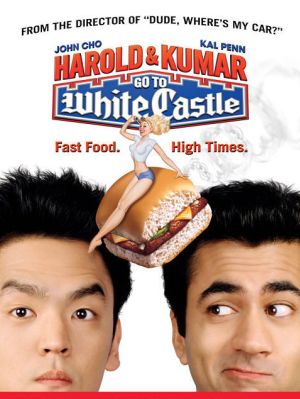
The majority of stoner movies, though, don't really show the downside to drug use. One recent movie that I think falls into this category is Harold and Kumar Go to White Castle. The entire premise of the film is brought on by smoking pot and getting the munchies, leading the two main characters on an adventure that results in epiphanies/major life changes that are relatively positive. Even though Pineapple Express and Harold and Kumar Go to White Castle can both be put into the genre of stoner comedies, they have very different messages. It seems as if most movies that focus mainly on drugs have to be comedies these days, even if they do have a significant message to relay.

Thursday, March 12, 2009

Tonto and the Lone Ranger Do Counterculture


From the opening credits to the end, I think Easy Rider has to be one of the most stereotypically "cool" movies we've watched all semester. Filmed during the first part of 1968, Easy Rider exemplifies the best and the worst about the booming counterculture going on all across the United States, and sort of foreshadows the darker turn the movement would make shortly after the filming of the movie. The movie kicks off with lots of drugs and lots of rock n' roll (don't worry, we'll get to the sex a little later), much like a lot of stoner movies nowadays. However, I seriously doubt that Easy Rider could be classified as a stoner movie--although the main characters are indeed stoned for a good deal of the film--due to its serious outlook on American society and grim themes violence and the less happy side of drug culture.

Like most movies in the bildundsroman genre, Easy Rider has the main protagonist and his sidekick. Now, I think we can all spot the fact that Peter Fonda's character Wyatt is the main protagonist from a mile away--for the love, Billy calls him Captain America! That, of course, leaves Dennis Hopper's character Billy as the ever-faithful sidekick. From the very beginning, they kind of reminded me of an amoral Tonto and the Lone Ranger. However, in this story, I don't feel that Billy supplemented Wyatt's personal growth; rather, he provided a contrast to the sort of life that Wyatt thought the counterculture was all about. Billy lived off of and actively participated in the counterculture and all of its glories and excesses, but in the end his mindset was not so different from that of a staunch old Republican: take advantage of capitalism and make a fortune, then find a nice condo in Boca and settle in for the rest of your days. He is very casual about the whole journey, from the commune to Marti Gras Billy is along for the ride, having a good ole' time.

Wyatt is another story. Much more reserved and removed, everything Wyatt does has an air of sacredness to it. Take for example the acid trip toward the end of the movie. Wyatt deals out the tablets like he is a priest delivering the Eucharist on Sunday morning. He also seems to subscribe to a somewhat virtuous code of living, at least when it comes to hospitality and being a polite guest. He makes sure to compliment the owner of the farm on his "nice spread" and in the commune he gently chastises Billy for wanting to refuse some of the women a ride to another place, pointing out that he and Billy had eaten their food and therefore owed the women a ride. Unlike Billy, Wyatt is not so much into the coke dealing and living off of other people's money. At the commune, he seems genuinely interested in the idea of being self-sufficient and living off of the land, and appears pretty impressed with the farmers, even though they are almost certainly doomed to failure.

Between Wyatt and Billy, I'd have to say that Wyatt is most clearly the epitome of cool within the film. However, the question must be asked: are either one of them that cool? Sure, they are kind of free and definitely represent freedom of the open road, but what is the frame of reference for coolness? Personally, I don't find the drug scene all that cool, and they were both pretty deeply involved in that. I think what Easy Rider said most to me is that there is no hard and fast rule of cool.