Unlike Woody Allen's character in Play It Again, Sam, I can't confess to having an incredibly distinct voice of cool helping me to operate smoothly on a day-to-day basis. In fact, I rather wish I did have something of the sort (even though Bogart didn't really make Allan Felix any cooler) because most of the time, I have a tendency to say and do painfully uncool things. On the rare occasions when I manage a witty remark or a suave mannerism, I like to think that it is somewhat original. However, while watching Woody Allen stumble around and make a general idiot out of himself I realized that I do tend to be a lot like Allan Felix, though perhaps not as neurotic, in that I way overanalyze everything and play out extensive scenarios in my head. This realization really made me consider just who is running the internal monologue that plays endlessly in my head. After consulting said voice, I realized that my "inner cool" seems to consist more of a cabinet of advisors rather than one specific person, like Allan's imaginary Humphrey Bogart.
Jerry Seinfeld is a pretty predominant presence in my head, as I've been a huge Seinfeld fan for most of my post-adolescent life. Jerry definitely relates to my slightly neurotic, kind of postmodern, self-obsessed side. Though during Woody Allen's heyday in the 1970s, being a neurotic Jew from New York City may not have been cool, Jerry Seinfeld and Larry David somehow managed to turn this characature into something hip. Since the rise of "the show about nothing", it is almost as if our culture is a little weirded out by normalcy ("What do you mean you don't have problems? What's wrong with you!?"). Nowadays one is seen as slightly quirky and interesting for having some form of social awkwardness and/or neurosis instead of being percieved as a little off.
Another regular commentator in my life is none other than my favorite animated character of all time, Daria Morgandorffer. For my entire high school career and on into college, more than one person has compared me to Miss Morgendorffer. To be honest, there's something in me that absolutely does not mind being likened to the dry, sarcastic, and acerbic character that Daria so well embodies. She may not be one of the cool kids, but she is most definitely cool (and I am not nearly so cool as she). I've always liked Daria and related to her because like me, she tends to sit back and watch the world around her; she is an observer and a commentator, rather than an active participant. I myself have never been much of a joiner, but unlike Allan Felix, I don't really have much of a desire to change my personality. I'm okay with not being the most popular person in the room or the life of the party. I'm fairly content with just being me, which is why I think Daria is the voice for my inner cool.
Thursday, February 12, 2009

Tuesday, February 10, 2009
The Coolness of Sacrifice

I know that for most people a major theme in Casablanca is sacrificing love for the greater good, but I just don't know if I buy it. Does Rick really love Ilsa? Personally, I have to say that I don't think he does. I think that for Rick, he idealizes Ilsa as the embodiment of his past when he fought definitively on the side of good, before France fell to the Nazis, before the war got real. However cynical I may be about the subject of Rick and Ilsa's love, I do still believe that Rick makes some pretty big sacrifices.
Hayley pointed out in her blog that before Ilsa left him, Rick seemed poised to become the quintessential hero: before Casablanca, he's the guy who doesn't get his hands dirty, who always lives up to his ideals. Rick does not end up in this role, though. Instead, he ends up in Casablanca dealing with corrupt Vichy French officers and Nazis, breaking laws right and left, all the while maintaining a cool as a cucumber persona and helping his customers get to America. For me, it is this sacrifice that makes Rick so cool. Rick Blaine is not a conventional hero, but he is a hero nonetheless.
Strangely enough, this morally ambiguous type of heroism and sacrifice has become a major icon of coolness in pop culture, especially in the realm of superheroes. The biggest example of cool sacrifice we've seen recently in the movies has to be the Caped Crusader himself, Batman. The most recent incarnation of Gotham City's favorite vigilante is in Christopher Nolan's The Dark Knight, which puts a dark and deeply existential spin on a classic superhero. By the end of the film, Batman is faced with taking the blame for all of the chaos in Gotham City caused by the actions of the Joker and later Harvey Dent. He has two choices: either let the citizens of Gotham know that their beloved face of justice (Dent) has become a villain, thereby destroying any hope for a better Gotham, or take the blame for everything gone wrong himself. Whether or not you have seen the film, I think you can guess which course of action Batman decides to take. He sacrifices his own potential for heroism and happiness for the greater good, much like Rick Blaine does when he lets Ilsa go.
Rick Blaine and Bruce Wayne may not have much else in common, but they are both prim
 e examples of sacrificing things--women, reputation, maybe even life--to further the greater good. They both understand that not everyone gets to be the poster boy for the side of right and that in any battle, against the Nazis or against madmen in clown makeup, someone is going to get dirty. This requires a sacrifice which is, in the end, supremely cool.
Thursday, February 5, 2009
As Time Goes By
"Louis, I think this is the beginning of a beautiful friendship." Humphrey Bogart's famous exit line has always been one of my favorites, but I have never really thought about the line in context to the rest of the movie. To me, this line is very indicative of how Rick changes throughout the film, and how his personal changes affect the people around him. At the beginning of Casablanca, Rick Blaine doesn't seem to be the type of guy who has a whole lot of beautiful friendships, does he? He is the supreme cynical observer, never drinking or interacting with his customers, a grab-bag of nationalities stuck in the purgatory of Casablanca and Nazi and Vichy French officers. Though Rick claims to be completely neutral, he has in the past fought against the Nationalists in the Spanish Civil War and allows illegal exit visas to be sold in his nightclub. This neutral, cynical shell begins to crack, however, from the moment Ilsa Lund walks into Rick's club and back into his life.
Upon Ilsa's arrival, we learn that she and Rick were lovers in Paris up until the German occupation. We also learn that Rick is not nearly as cynical or disattached as he wants his Casablanca cohorts to believe. A few days after Ilsa and Victor's arrival, Rick seriously breeches his modus operandi by helping a young couple obtain the money for exit visas so the woman could escape to America and still remain loyal to her husband. It is at this moment that we realize loyalty means something to Rick, no matter the opportunist personal philosophy he expounds. As the story progresses and Ilsa finally gives Rick the reason she never met him to escape Paris, Rick once again respects her loyalty to her husband, Victor. Though no one in the film overtly mentions loyalty as an important theme, it seems to surround Rick. His friends and employees are endlessly loyal to him, Ugarte trusts Rick to by loyal to the Underground cause by entrusting him with the letters of transit, and in the end even the morally unscrupulous Renault expresses loyalty towards Rick by choosing not to narc on him when he shoots a German officer. Rick himself is in the end loyal to the cause of fighting the Nazis, expressing this sentiment in his sacrifice of his relationship with Ilsa so Victor's work can continue.
Something I have never really noticed in watching Casablanca that I picked up on this time is the parallel between the film characters and the countries participating in World War II. Rick and his pianist Sam are the only Americans in the film, and are representations of the United States itself. Rick seems to embody the neutral, isolationist side of America, while Sam and his music represent the hope offered by America to all of the people who come to Rick's club in hopes of eventually reaching the United States. Rick's actions also reflect the actions of the U.S. during the course of the war. At the beginning of the film, Rick takes care of his customers but does not get directly involved with them, much like the U.S. took measures to help the Allied side while maintaining neutrality in the beginning of the war. At the end of the film, Rick's involvement saves the day, just like the American troops' entrance into Europe changed the tide drastically (at least according to the American point of view).
Upon Ilsa's arrival, we learn that she and Rick were lovers in Paris up until the German occupation. We also learn that Rick is not nearly as cynical or disattached as he wants his Casablanca cohorts to believe. A few days after Ilsa and Victor's arrival, Rick seriously breeches his modus operandi by helping a young couple obtain the money for exit visas so the woman could escape to America and still remain loyal to her husband. It is at this moment that we realize loyalty means something to Rick, no matter the opportunist personal philosophy he expounds. As the story progresses and Ilsa finally gives Rick the reason she never met him to escape Paris, Rick once again respects her loyalty to her husband, Victor. Though no one in the film overtly mentions loyalty as an important theme, it seems to surround Rick. His friends and employees are endlessly loyal to him, Ugarte trusts Rick to by loyal to the Underground cause by entrusting him with the letters of transit, and in the end even the morally unscrupulous Renault expresses loyalty towards Rick by choosing not to narc on him when he shoots a German officer. Rick himself is in the end loyal to the cause of fighting the Nazis, expressing this sentiment in his sacrifice of his relationship with Ilsa so Victor's work can continue.
Something I have never really noticed in watching Casablanca that I picked up on this time is the parallel between the film characters and the countries participating in World War II. Rick and his pianist Sam are the only Americans in the film, and are representations of the United States itself. Rick seems to embody the neutral, isolationist side of America, while Sam and his music represent the hope offered by America to all of the people who come to Rick's club in hopes of eventually reaching the United States. Rick's actions also reflect the actions of the U.S. during the course of the war. At the beginning of the film, Rick takes care of his customers but does not get directly involved with them, much like the U.S. took measures to help the Allied side while maintaining neutrality in the beginning of the war. At the end of the film, Rick's involvement saves the day, just like the American troops' entrance into Europe changed the tide drastically (at least according to the American point of view).
Tuesday, February 3, 2009
We've Got It Bad, And That Ain't Good (or is it?)
While watching The Public Enemy, my idea of cool was once again conflicted. Looking at the film objectively, there is a lot of evidence to point to the coolness of Tom Powers. From his confident swagger to the self-assured way he treats his women to his sharp sense of style, Tom is the epitome of ironic detachment. And then there's the booze. Like it or not, the guy with the drinks is always at least a little cool. On the flip side, when I view the film according to my own ideas of cool, Tom seems like less of a paragon of awesomeness and more and more like a jerky loser. He's got a serious case of youngest child syndrome and some major sibling rivalry issues with his older and more glorified brother, Mike. As the movie went on and Tom's personality came to light, I saw Tom's confident swagger as an arrogant strut that did more to hide a weak character than to emulate actual confidence. His self-assured womanizing ways came off as controlling, and his petty temper tantrums revealed a definite reaction to being spoiled by his mom and brother his whole life. Added up, all of these things make for a most uncool individual.
While in the end Tom Powers as a person didn't come off as cool to me, his job occupation--ruthless, bad-ass Mafia member--still has a certain appeal. I think this begs the question: what makes criminality so cool? Dissidence is definitely a factor; rebellious movie characters from A to Zuko are highly indicative of America's fascination with dissident cool. I think that everyone, at least once in a while, wishes that he or she could be that Rebel Without a Cause who isn't bound by conventional social obligations. When people automatically expect you to operate in a way that rejects social standards, you are released from the kind of social pressures and rules that can be overly demanding on a day-to-day basis. Watching someone else defy society is for me a kind of vicarious release, which is one of the reasons I think criminality has a certain coolness.
Another aspect of cool criminality has to do with moral ambiguity, as we discussed after the movie. In Mafia movies, we often see morally corrupt drug runners and murderers expressing social virtues like loyalty, kindness, and generosity (at least to those who show respect). The movie that this kind of paradox brings to mind immediately is The Godfather, probably the best-known mob movie of all time. At the beginning of the film Michael Corleone, the son of prominent mob boss Don Vito Corleone, is much like the character of Mike in The Public Enemy. He is a war vet and even though he is surrounded by criminal activity, he vows that he will not participate in Mafia activity. However, when another Mafia family kills Don Corleone for refusing to involve the Corleone family in drug running (another example of the moral paradox of the Mafia), Michael is thrust into the position of Don Vito's heir and avenger. It throws me for a loop every time I watch it, because even though socially we know that killing people is wrong, when Michael Corleone shoots a guy in the face to avenge his father, it somehow seems justified. In fact, for some reason or another it seems disloyal for him not to get involved upon his father's death. I really don't know what makes moral ambiguity so cool, but it there is something about the uncertainty that makes it both a fascinating and desirable trait in characters.
From The Public Enemy to more recent crime movies such as The Departed, criminality has remained cool for decades. Characters like those played by James Cagney, Robert DiNiro, and Leonardo DiCaprio have become cultural icons of cool, but that is what they are and what they will remain: characters. Is criminality only cool in movies? What would we think about these guys in real life? Criminality is cool when we can distance ourselves from it, but what do we think when it hits too close to home? Like the beginning and end notes of The Public Enemy point out, criminality is real, and rarely really cool.
While in the end Tom Powers as a person didn't come off as cool to me, his job occupation--ruthless, bad-ass Mafia member--still has a certain appeal. I think this begs the question: what makes criminality so cool? Dissidence is definitely a factor; rebellious movie characters from A to Zuko are highly indicative of America's fascination with dissident cool. I think that everyone, at least once in a while, wishes that he or she could be that Rebel Without a Cause who isn't bound by conventional social obligations. When people automatically expect you to operate in a way that rejects social standards, you are released from the kind of social pressures and rules that can be overly demanding on a day-to-day basis. Watching someone else defy society is for me a kind of vicarious release, which is one of the reasons I think criminality has a certain coolness.
Another aspect of cool criminality has to do with moral ambiguity, as we discussed after the movie. In Mafia movies, we often see morally corrupt drug runners and murderers expressing social virtues like loyalty, kindness, and generosity (at least to those who show respect). The movie that this kind of paradox brings to mind immediately is The Godfather, probably the best-known mob movie of all time. At the beginning of the film Michael Corleone, the son of prominent mob boss Don Vito Corleone, is much like the character of Mike in The Public Enemy. He is a war vet and even though he is surrounded by criminal activity, he vows that he will not participate in Mafia activity. However, when another Mafia family kills Don Corleone for refusing to involve the Corleone family in drug running (another example of the moral paradox of the Mafia), Michael is thrust into the position of Don Vito's heir and avenger. It throws me for a loop every time I watch it, because even though socially we know that killing people is wrong, when Michael Corleone shoots a guy in the face to avenge his father, it somehow seems justified. In fact, for some reason or another it seems disloyal for him not to get involved upon his father's death. I really don't know what makes moral ambiguity so cool, but it there is something about the uncertainty that makes it both a fascinating and desirable trait in characters.
From The Public Enemy to more recent crime movies such as The Departed, criminality has remained cool for decades. Characters like those played by James Cagney, Robert DiNiro, and Leonardo DiCaprio have become cultural icons of cool, but that is what they are and what they will remain: characters. Is criminality only cool in movies? What would we think about these guys in real life? Criminality is cool when we can distance ourselves from it, but what do we think when it hits too close to home? Like the beginning and end notes of The Public Enemy point out, criminality is real, and rarely really cool.
Thursday, January 29, 2009
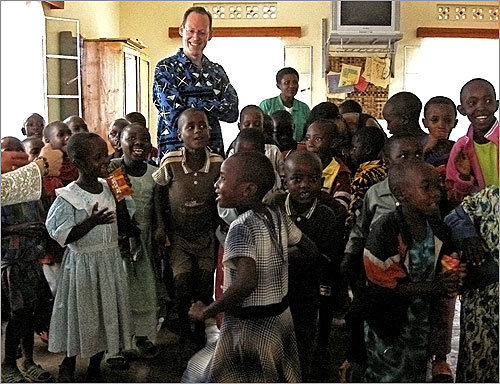
Illustrated Cool


CHANGE
Global Awareness
Yes, we can
finding our common
humanity
Conviction
Understanding
Liberation theology
Love
Taking Action
Laughter Self-Deprecating humor Sarcasm Obscure pop culture references
 Wittiness
Success INTELLIGENCE Being well read new ideas perspective Open-mindedness


Tuesday, January 27, 2009
Echoing the Past
After the class discussion on the early history of film on Wednesday night, I looked up several examples through our own generation’s revolutionary film medium, YouTube. While I watched a collection of films by the Lumiere brothers, I couldn’t help but think about how amazing it would have been to participate in these early experiments with moving pictures. Now, we think nothing of picking up a camera and goofing off with friends, haphazardly recording and deleting footage right and left. Even though I do have a digital camera, I don’t like the idea of deleting pictures or video; every time I do, I feel as if I’m erasing a moment of history, and perhaps that is why I felt a sort of connection to these early films. There was something very cool about watching regular people make history by doing something as mundane as eating breakfast.
What struck me the most after watching Edison's recording of a sneeze and Melies's slightly more high-tech films Le Monstre and Le Diable Noir is how little the kinds of things we film have changed. If you type "the sneeze" into the YouTube search bar, approximently six thousand eight hundred and ninety videos come up, including the ever popular Sneezing Panda. I find it completely remarkable that a video of something sneezing has gotten over thirty million hits. The films made by magician Georges Melies are also still highly entertaining. Melies's four minute long short Le Diable Noir is the epitome of the timelessly funny genre of physical comedy. It doesn't matter if it is was fifty years ago, a hundred years ago, or just last week, there is something inherently funny about watching someone be duped over. From fans of Tom and Jerry cartoons to the Home Alone movies, there will alwyas be an audience for this type of humor.
The other thing that I found facinating about the Melies films was that the special effects used to animate the skeleton in Le Monstre and to make people disappear and reappear in Le Diable Noir are still put into practice today. The methods may be simple, but that does not mean that they are not as entertaining and valuable as those used in bigger, more elaborate productions. There is definitely a certain timelessness to Melies's work, if only because of the consistency of human nature. Though film has evolved in several ways, in some aspects it is still the same as in the early years.Monday, January 26, 2009
Cool?
I have to admit that before Wednesday night, I never bothered to think about my perception of what "cool" is. I simply used it as a word akin to "good" or "interesting", used it to describe things such as a fun locale, an intriguing class, or the latest bizarre diagnosis on House. However, since our class discussion on the endless array of coolness that fills vast outer reaches of pop culture, I haven't been able to stop thinking about what "cool" means. What is it about someone or something that makes us reach into our collective lexicon and pull out the most honored label of "cool"?
Though personally I don't necessarily subscribe to postmodernism, I believe that we can all easily assume that "cool" is relative as well as surprisingly complex. In modern society, it is not uncommon for things as diverse as the Religious Freedom and Civil Marriage Protection Act and Beyonce's new music video to be referred to using the same word: cool. Cool can be anything, and anything can be cool.
For example, Barack Obama (as F. John mentioned) has most definitely been deemed cool by American popular culture. But what is it that makes Obama so cool? Is it his youth, his straightforwardness, his celebrity support? I believe that all of these things contribute to Obama’s coolness, but that a large part of being cool is one’s self-perception. No matter what cool really is, it is both socially and individually defined. This is why not only our president can be called cool, but so can punk rockers, comic book collectors, your local school’s star quarterback, and even aspiring museum curators who like to knit.
I think the cool thing about “cool” is that it is essentially indefinable. However indefinable it may be, though, the concept of cool is still worth exploring. I have never had an Honors class that has not somehow changed my perception of the world in some way, and I am positive that this one will not be the exception. Cool is a complicated topic, but I look forward to seeking out all of the different facets of “cool” experienced throughout the last century of film. In the words of Margo Channing—in my opinion, one of the coolest characters to ever grace the Silver Screen--, “Fasten your seatbelts, it’s going to be a bumpy night.”
Subscribe to:
Posts (Atom)